Bus Tracker — Coach financial tracking
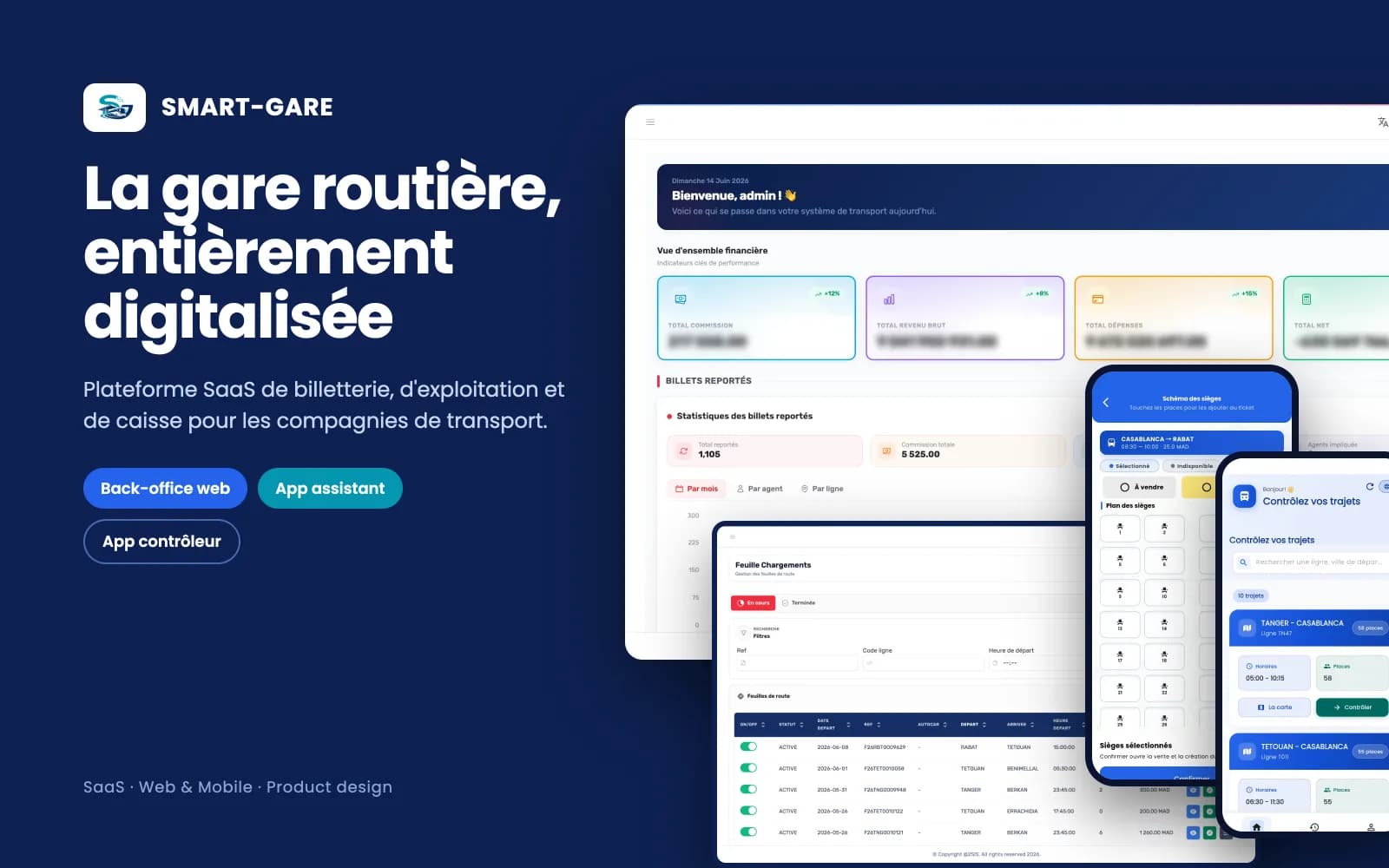
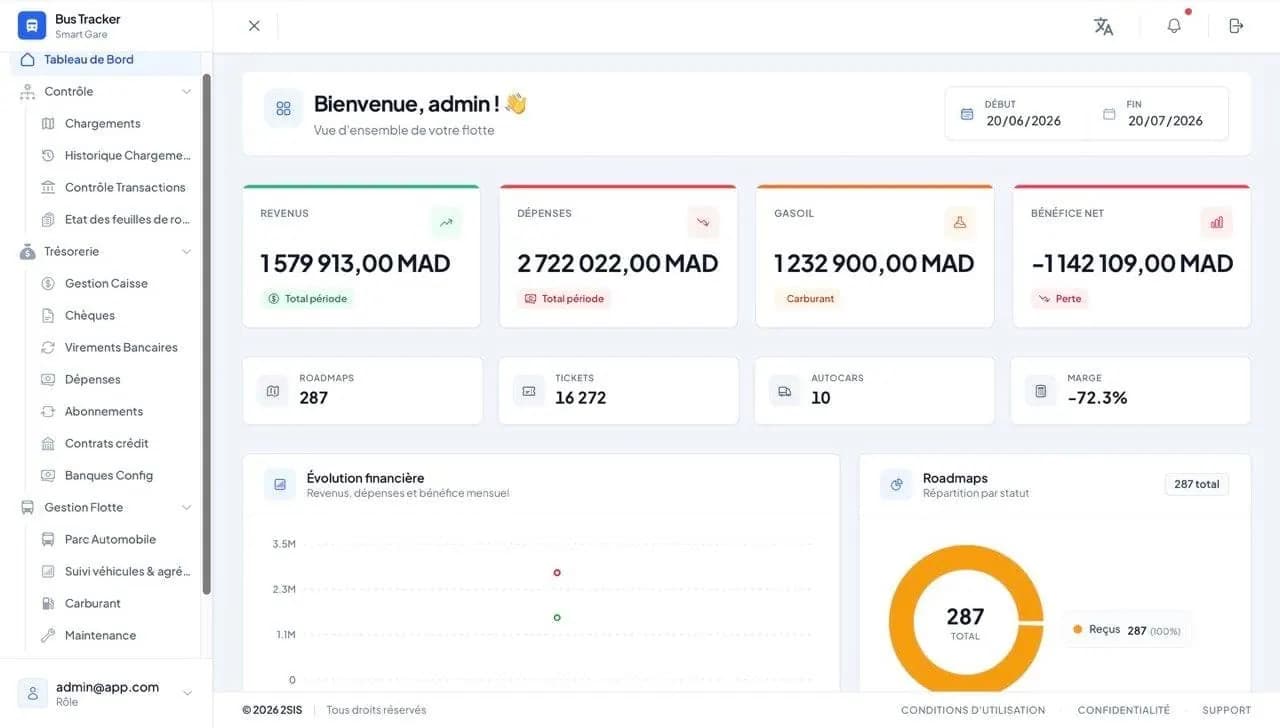
The coach financial tracking platform that centralizes fleet, tickets, revenue, trips, maintenance and treasury for intercity transport.
- React 18
- TypeScript
- Vite
- Redux Toolkit
- Spring Boot 3.2
- PostgreSQL
- MongoDB
- SECTOR
- Transport · Finance
- STATUS
- Delivered
- TYPE
- SaaS platform
- MODULES
- 10
The platform in pictures.
Business challenge
Provide immediate visibility on vehicles and departures, secure sales and cash movements, then bring operations, revenue and fleet together in an auditable system.
Bus Tracker is a SaaS platform for operators who track finances, coaches, intercity routes, stations and high-frequency daily operations.
It replaces scattered files, paper ticketing and isolated tools with a single environment used by drivers, station agents, cashiers, dispatchers and finance teams.
Built to absorb thousands of trips, tickets and cash movements, the solution separates transactional data from audit data to preserve the performance, traceability and security of every operation.
Problems solved
BEFORE- 01No real-time visibility on vehicles, departures, delays and capacity
- 02Risk of leakage on tickets and cash in multi-station sales
- 03Planning, assignments, ticketing and accounting handled in disconnected tools
Key features
- 01
Fleet
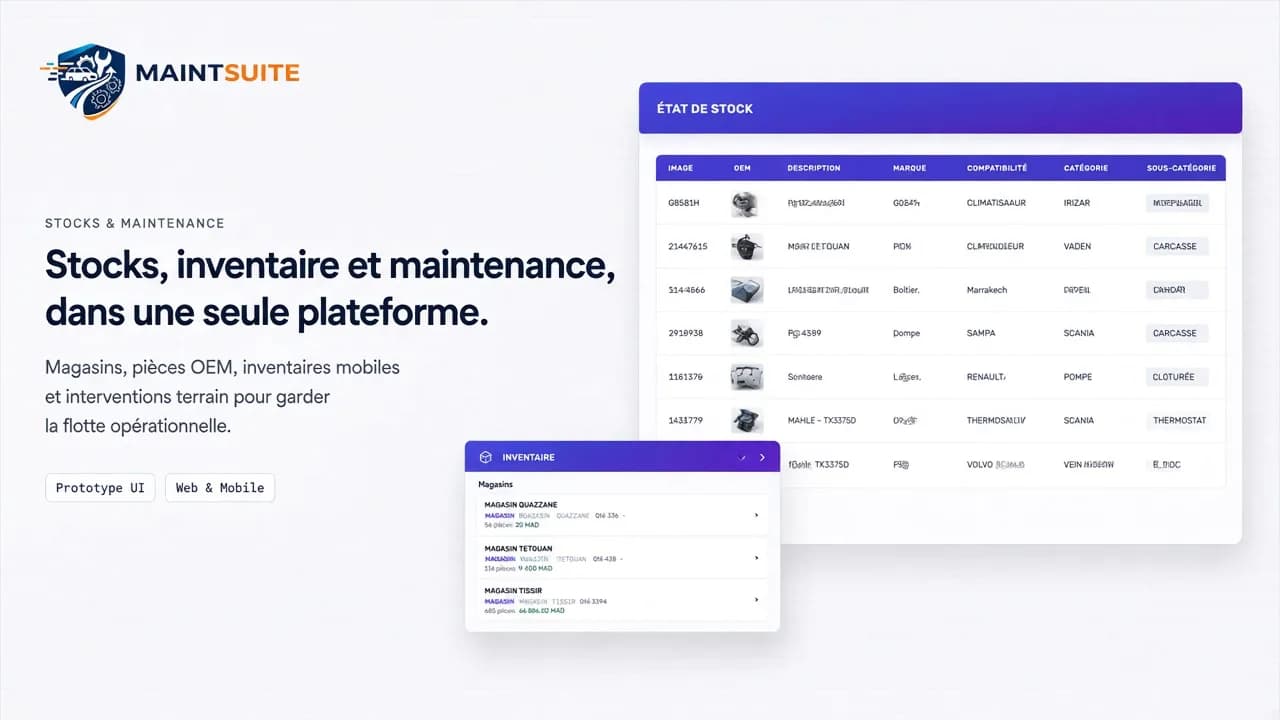
Vehicles, documents, maintenance and driver assignment.
- 02
Routes
Intercity itineraries, stops, schedules, fares and seasonal variations.
- 03
Roadmaps
Daily planning, driver and vehicle assignment, then real-time trip status.
- 04
Ticketing and cash desk
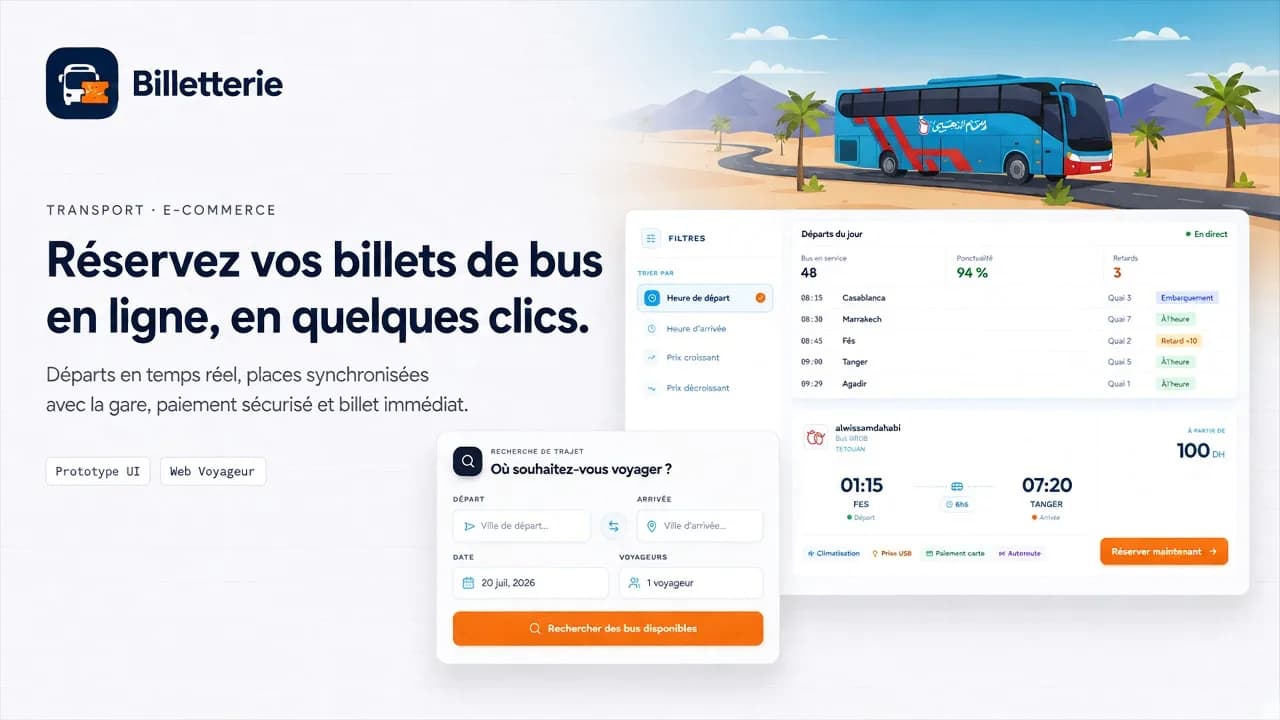
Sales, seating, receipts and cash shift tracking.
- 05
Station operations
Departures, arrivals, agent activity and passenger flows per station.
- 06
Real-time tracking
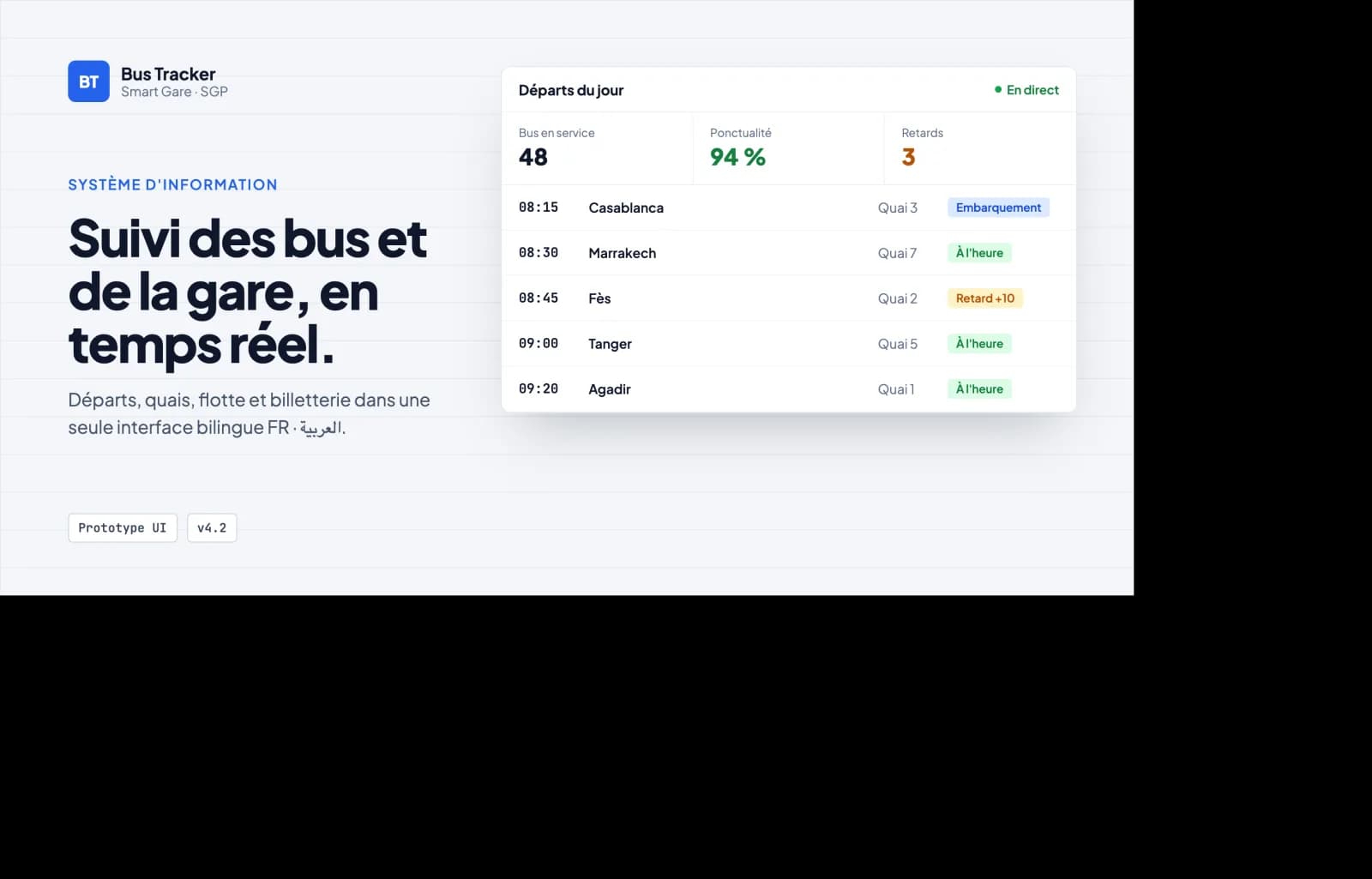
Vehicle position, trip timeline and deviation alerts.
- 07
Treasury
Reconciliation per station, financial journals and reports.
- 08
Notifications
Operational alerts on delays, cancellations and incidents.
- 09
Access and audit
Fine-grained permissions, JWT authentication and immutable history.
- 10
Settings
Reference data, operator configuration and feature toggles.
(Operational pipeline)
From need to result, without breaks.
- 01
Register
Record vehicles, drivers, routes, stops, schedules and fares.
- 02
Plan
Build the daily roadmap and assign vehicles and drivers.
- 03
Sell
Issue tickets, allocate seats and track every cash shift.
- 04
Track
View trips, positions, events and deviations in real time.
- 05
Reconcile
Consolidate revenue per station and control cash flows.
- 06
Audit
Attribute every action, keep history and produce reports.
How the platform is built.
Technical choices
Reliable backend
- Generic CRUD framework for consistent behavior
- Uniform API responses and versioned Liquibase migrations
- Soft delete and full audit of every entity
- JdbcTemplate analytics queries separated from JPA transactions
Controlled frontend
- Feature-based architecture and strictly typed API layer
- Redux Toolkit, global loading and centralized error handling
- Routes protected by authentication and permission
- Dev, QA and production configs with Playwright tests
Security and events
- Identical permissions in the API and the UI
- JWT authentication and role-based control
- Separate audit log in MongoDB
- Event-driven sync with PostgreSQL LISTEN/NOTIFY
- React 18
- TypeScript
- Vite
- Redux Toolkit
- Spring Boot 3.2
- PostgreSQL
- MongoDB
- 01Intercity transport operators
- 02Station managers and dispatchers
- 03Finance teams and cashiers
- 04Fleet managers
- 01Built around real station and ticketing workflows
- 02Full traceability of sales, movements and changes
- 03Consistent rights between the UI and the APIs
- 04Trip sync without constant polling
Results and impact
AFTER- Seven operational domains in a single platform
- Same-day revenue reconciliation
- Real-time visibility for agents and dispatchers
- Attributable and reversible operation history
- Zero-downtime schema evolution with Liquibase migrations
Everything about Bus Tracker.
Have a similar project in mind?
Let’s talk about your processes and the platform that will make them reliable, traceable and manageable.
A web platform for coach financial tracking, fleet management, ticketing, trips and treasury for intercity transport operators.
The frontend uses React 18 and TypeScript. The backend uses Spring Boot 3.2 and Java 17, with PostgreSQL for transactions, MongoDB for audit and Docker Compose for deployment.
Every endpoint and UI action is protected by fine-grained permissions, with JWT, role-based control and full logging.
Yes. An operator can manage several stations, routes, vehicles, drivers and cash desk profiles in the same environment.